
Aircon & HVAC advice
Updated 16 October 2026
Both can supply chilled water
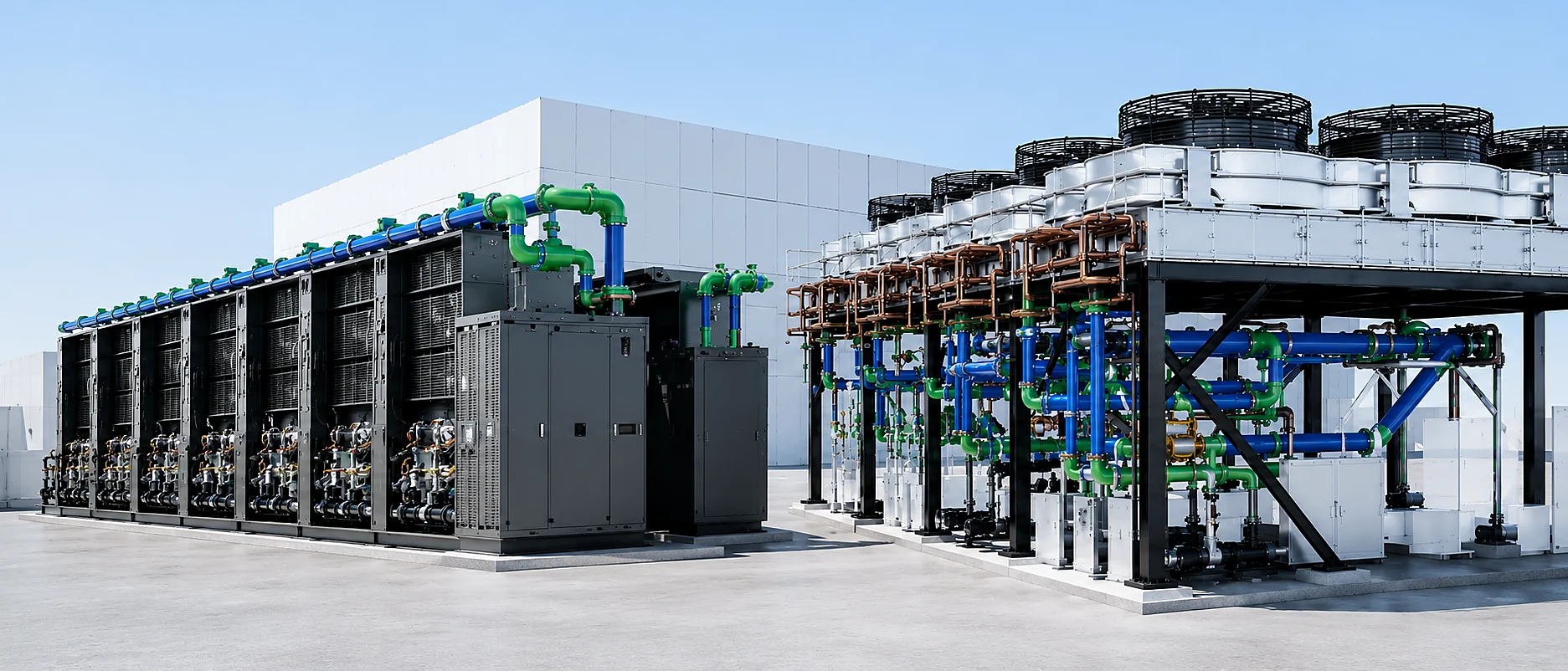
The names describe how heat is rejected from the refrigeration system. An air-cooled chiller rejects heat to outdoor air. A water-cooled chiller transfers heat to a condenser-water system, commonly connected to a cooling tower. Both can serve a building’s chilled-water distribution system.
Air-cooled: assess outdoor space and airflow
An air-cooled installation needs a suitable outdoor position, clear airflow and service access. Include noise, structural support and the route to the building in the site assessment. Removing the cooling-tower requirement simplifies some plant arrangements, but fans and coils still need maintenance.
Water-cooled: assess the whole plant
Consider the chiller together with condenser-water pumps, heat-rejection equipment and water-management requirements. Maintenance planning may include cooling-tower components, water treatment and condenser cleaning. Evaluate the complete installation rather than comparing only the price of the chiller.
Compare operating conditions and lifetime costs
Ask the designer to compare options at the required load and local design conditions. Include installation, energy, water, service access and maintenance in the assessment. There is no universal cost winner: the building, operating hours and available infrastructure influence the result.
Information to bring to a site assessment
Provide the required cooling duty if known, operating hours, existing equipment details, available plant space and any future expansion plans. Identify critical areas and shutdown limits. A replacement decision should follow a system assessment rather than matching the old unit’s label alone.
Further reading: Trane chilled-water systems engineering guide.